
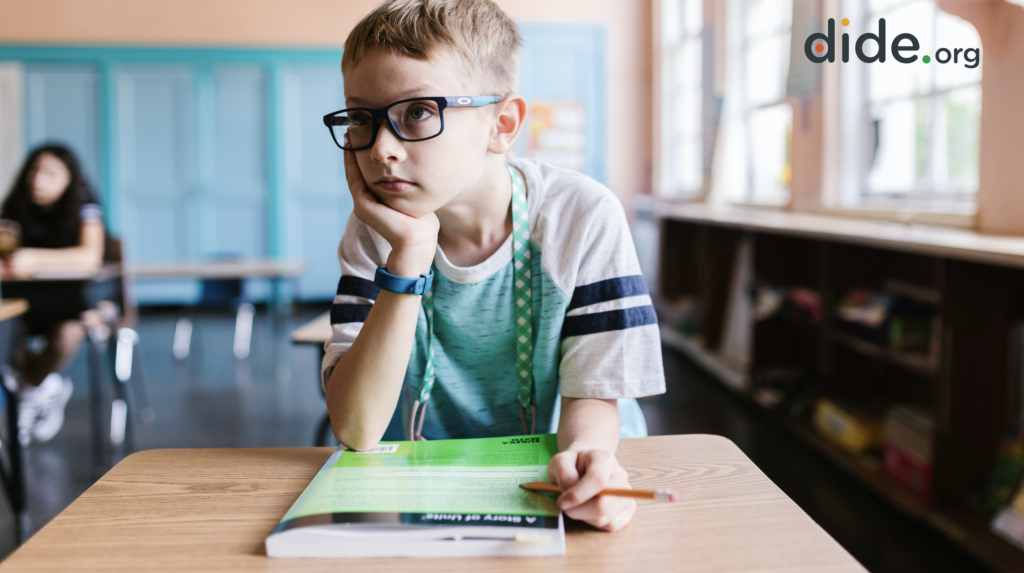
Vision is one of the most important senses for the development and learning of our children. Through sight, they relate to the world around them, explore their environment, and learn to read, write, and perform other activities. Therefore, it is essential that parents and families pay attention to their children’s visual health and ensure that they do not have any problems that may affect their development.
A high incidence
According to data from the World Health Organization (WHO), between 20 and 30% of school-age children have some type of visual problem. In Spain, the figure is similar, with 25% of children presenting some visual difficulty.
It is estimated that worldwide there are at least 2.2 billion people with near or distant vision impairment. Of the total figure, 1 billion of those cases, or practically half, of visual disability could have been avoided or have not yet received treatment.
According to data handled by the General Council of Colleges of Opticians-Optometrists (CGCOO), 30% of academic failure among Spanish students is due to the non-detection of visual problems.
The most common visual problems are refractive errors, such as myopia, hyperopia, and astigmatism. These problems occur when light does not focus correctly on the retina, which can cause blurred vision, eye fatigue, and headaches.
Other visual problems that can affect children are strabismus, amblyopia, and congenital cataracts. Strabismus is a condition in which the eyes are not aligned correctly, which can cause double vision. Amblyopia, also known as lazy eye, is a condition in which one of the eyes does not develop correctly. Congenital cataracts are an opacification of the lens of the eye that can cause blurred vision or blindness.
What are the symptoms to watch out for?
There are some symptoms that may indicate that a child has a visual problem. If you observe any of these symptoms in your child, it is important to act as soon as possible:
- Blurred vision
- Eye strain
- Headaches
- Squints or gets very close to objects to see
- Tilts head to see
- Frequently stumbles or falls
- Has difficulty reading or writing
- Is easily distracted
Once we have identified the problem, how can we help them?
If your child has a visual problem, it is important that they follow the treatment recommended by the doctor or optometrist. In most cases, treatment consists of wearing glasses or contact lenses.
In addition to treatment, there are some recommendations that you can apply at home to help improve their vision:
- Create a suitable lighting environment so that they can see clearly.
- Prevent them from watching television or using electronic devices for extended periods of time.
- Perform activities that require the use of vision, such as reading, drawing, or playing outdoor games.
Early detection of visual problems in children is essential to prevent complications that may affect their development and educational process. Therefore, it is important that parents are aware of the symptoms that may indicate that their child has a visual problem. We invite you to listen to our Doctor of Psychology, Nuria Ros, on La Tarde con Marina to expand on these guidelines and recommendations. At Dide.org we are experts in detecting educational, emotional and behavioral potentials and difficulties early in order to intervene. You can access the diagnostic tool in this link.
