Conference on innovation in methods and tools for early detection of learning and development difficulties in Dos Hermanas, Seville
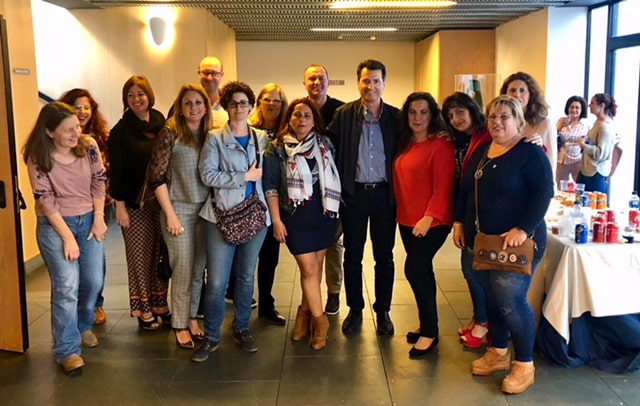
Under the slogan “Let’s transform differences into opportunities together”, the informative talk on innovation in educational technology for the early detection of learning and development difficulties in Dos Hermanas, Seville was presented last April.
The objective is to offer information about dide technology to facilitate education and psychology professionals in the early identification of problems that hinder learning and student well-being.
There is a clear need:
- Teachers demand information and training on the difficulties that their students may present
- Educational counselors need tools to help them speed up the process of evaluating children and prevent the diagnosis from being prolonged so that they can offer individualized attention focused on their strengths and potential.
- Parents want to know what educational needs their children have and that they are addressed in the best possible way to guarantee academic success and well-being.
We have the opinion of education professionals who apply this technology in their schools. Mario Criado, educational counselor of the Colegio San Juan de Dios. La Goleta from Malaga and Pilar Muñoz, psychologist and director of the Ábaco Children’s Psychology Center in Alcalá de Guadaíra, Seville.
https://www.youtube.com/watch?v=1OKalHbVC6o&t=577s
After six years of using díde, I have been able to verify that dide saves us costs and time, it gives us very clear indications of which specific tests we have to pass later. In my case, it is a fundamental detection tool that we pass to all the children in the center as a protocol.
If we do not detect the specific difficulties or needs of 5-year-old children in infancy, many children will not “get on the train” when they jump to primary school. In our center we appreciate characteristics of cases of dyslexia and even autism spectrum disorder that have been overlooked in infancy.
Diagnosing a learning or development difficulty in a child at an early age will have a better prognosis, favoring evolution in all aspects (social relations, self-esteem…) and helping to raise family awareness. (Pilar Muñoz, psychologist at the Ábaco center)
For his part, Mario Criado, educational counselor at the S. Juan de Dios La Goleta school, commented that with the ratio that counselors manage in schools, it is impossible to attend to all the specific needs, even teachers stop referring visible cases because they are aware of the lack of resources. “We have seen a very significant change since the implementation of díde in our center, especially in the relationship with families“, the counselor explains the ease of use and how dide adapts to families, making it easier for them to follow the methodology. As for teachers, Mario continues, despite the reservations due to the saturation they already suffer, they have realized that with dide they observe the students better and discover that with their observations they can identify opportunities for improvement that will undoubtedly favor the future and well-being of the minor.
A call for attention to diversity and the right of all students with specific educational support needs
It is obvious that the early detection of problems that hinder children’s learning has an impact on the well-being and motivation of the child. Early detection is a victory for the child, for their family and for the educational system, since it avoids situations that can end in school failure or emotional problems derived from the lack of attention and specialized guidance.
This methodology aims to identify the signs thanks to the observation of the people who know the child best, their parents and teachers. All through a simple, mechanized, affordable and online system. It is important to see the opportunities that favor their growth in all stages of development.
Key points
- Dide is a 100% online platform for collecting information with structured interviews, digital and personalized. Answered individually by those who know the minors best: the teaching staff and the family.
- The objective is to know, perceive and prevent any type of signal that marks the 35 observed indicators. Thanks to this information, the possibilities and capacities of each student are understood and maximized.
- Observation methodology, allows grouping the organized data of the essential and non-visible information in different areas of the minor.
- Streamlines and optimizes initial interviews.
LEARN MORE