

Dyslexia is a lifelong condition of neurobiological origin with a strong hereditary component.
Dyslexia persistently affects accuracy, fluency, and reading comprehension. It is the most common learning difficulty, affecting 10% of the population (International Dyslexia Association 2015). Nearly 5 million Spaniards and 700,000 students in our classrooms are suffering from this learning problem, of whom a large percentage are undiagnosed and, therefore, lack the measures that could reduce the impact on their studies.
Although dyslexia affects learning, it has nothing to do with intelligence. People who have this condition are as intelligent as anyone else. Many people with dyslexia have successful careers, including a long list of actors, entrepreneurs, and writers.
Children with dyslexia often have very low self-esteem. They have spent years trying to keep up with the class without much success. They have been accused of not trying hard enough, and in most cases, they are labeled as lazy, idle, or stupid. At home, they have not achieved the desired results, and if they have siblings, they may have been compared, both by the family and by themselves. Some pediatricians diagnose anxiety, depression, stomach upset, and headaches in children who have had undetected dyslexia.
The sooner it is known that they are not absent-minded or lazy children and they understand what their difficulties are and why they have to make a great effort to achieve what others do naturally, the sooner they will begin to accept their weaknesses and find their strengths.
The dyslexic child does not reach the different stages of literacy development as quickly and correctly as most of their peers.
Since reading and writing are the mediating instruments par excellence on which all learning is based, a low performance for a long time in these capacities will certainly adversely influence school performance and will produce a delay in the acquisition of knowledge in all subjects, which inevitably leads to the deterioration of the perception that the child has of themselves, and thus social and emotional problems that usually accompany learning disorders appear.
Despite the fact that the right to receive specific attention according to the difficulty is included in the Education Law since 2006, the reality is that, today, in most Autonomous Communities, there are NO detection or intervention protocols, and not even in the State School Council are the interests of our group represented. The right to an education, to learning in equal opportunities is constantly violated.
There is a long way to go and many obstacles to overcome, but they deserve it and the Dyslexia Platform continues in its struggle to demand that politicians, administrations and organizations ensure that existing laws are mandatory, that a specific section is created for dyslexia and at the national level so that being dyslexic in any community does not imply an inequality of opportunities and that scholarships are granted as to other groups to be able to access speech therapists, psychologists or pedagogues.
It’s called dyslexia and it is a learning difficulty that should not prevent a fully enjoyable academic, work, and personal life. It is necessary to know it and make it visible to society so that it does not continue to hide behind masks of immaturity, clumsiness or lack of effort.
The best outcome for the proper development of the child is early detection of their needs.
It is necessary to be able to face possible obstacles conveniently and satisfactorily and not left to occasional fortune.
A program like dide, in addition to early detection of signs or signals of a difficulty such as dyslexia, also offers the possibility of indicating other indicators, in this way, a global vision of the child’s profile or map of characteristics is achieved from 3-4 years of age, which will facilitate early attention and the success of their development.
It’s called dyslexia and it will bring out the best in you.
October 8, International Dyslexia Day
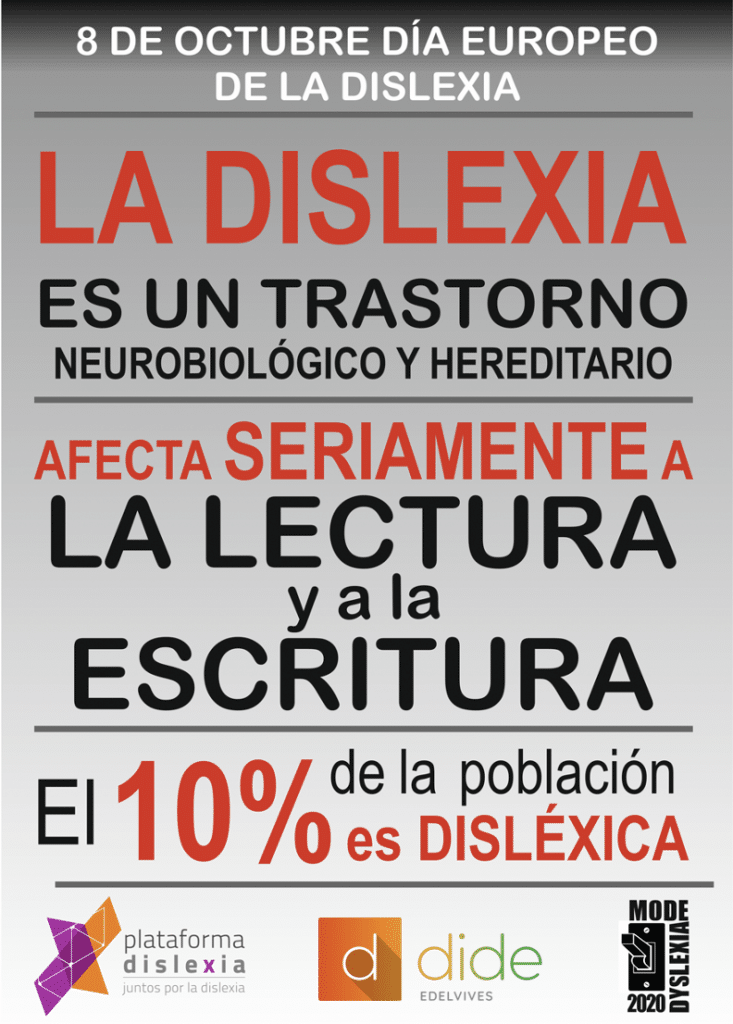
Source: Plataforma dislexia Dismálaga
You may be interested in: dide, information platform for the early detection of learning and development difficulties

