
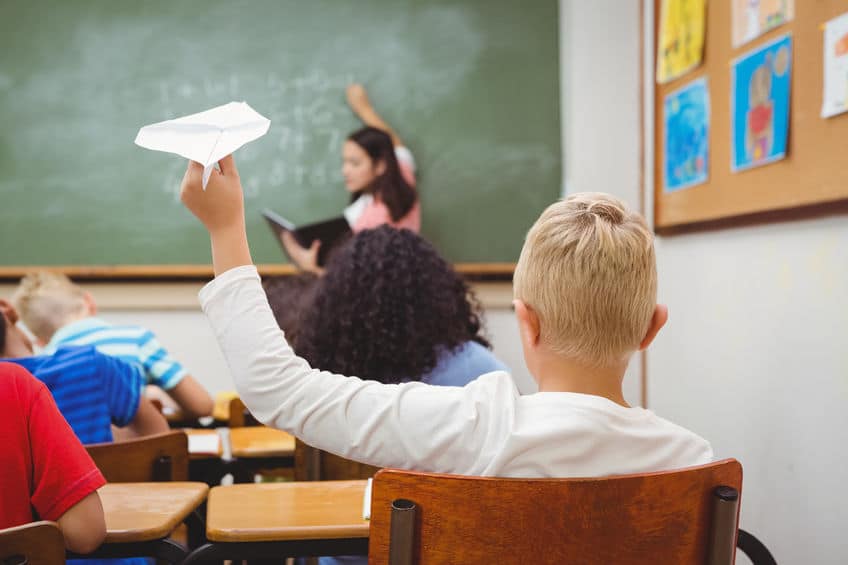
Las conductas disruptivas son acciones perturbadoras o agresivas que rompen la disciplina y alteran la armonía del grupo dificultando el proceso de enseñanza-aprendizaje y la atención en el aula.
During the course of the school stage, some children may occasionally present disruptive behaviors in the classroom, causing reactions that can also be negative for the child, for example, rejection by their peers and teachers, social isolation, as well as an increase in the same inappropriate behavior.
Some examples of these behaviors in the classroom are:
- Actively challenging teachers.
- Starting fights.
- Deliberately bothering other people.
- Attitudes of disobedience.
- Difficulty waiting and following instructions.
- Talking when the teacher is speaking.
- Frequently getting up from their seat.
- Arriving late to class.
- Not bringing materials, messing up furniture
- among others.
The family as a model. Education is an ambitious task, where do you start?
The first and most important reference of virtue and character that a child can have is the adult who takes care of him. The relationships of parents with children are based on the educational norms that regulate coexistence among all the members that compose it. Thus, for example, the rules of schedules that must be met, collaboration in household chores, the demands of parents towards children to assume their responsibilities, the lifestyle that the family leads, the limits of what they are allowed and not allowed to do, etc., are the first lessons that children learn about what is “right” and what is “wrong.”
Learning these lessons can be easy for some children and present difficulties for others, depending on how they assume not seeing their needs met immediately, the capacity for effort, the feeling of personal responsibility, etc.
Therefore, the adaptation of children with disruptive behaviors depends on three variables:
- The characteristics of the child: self-confident or passive, extroverted or introverted, sad or happy, calm or restless, shy or bold…
- If they present learning difficulties, developmental, emotional and/or behavioral, and if these have been detected and treated or not.
- The educational style they receive at home: Parents always want the best for our children, and with that objective we carry out our educational tasks as best we know how. But not everything that is done for children is adequate for their education. For example, authoritarianism or excessive permission in the rules of discipline are detrimental to the child.
Coordination with the school
The educational action carried out by the family must be complemented by the one developed by the school. The child should not perceive the school as something opposed to the family itself that acts differently. Therefore, parents must show them our educational interest by attending school appointments or meetings, interviews with the tutor, speaking positively about the teachers, in short, collaborating and strengthening the relationship with those who want the same end as us.
If you are a father or mother or educator, recognize that this is your most important, demanding and rewarding challenge. What you do every day, what you say and the way you act, will influence the formation of the future of our society more than any other factor” . Marion Wrght Edelman
Some recommendations to prevent disruptive behaviors in the classroom
- Arrive to the classroom relaxed, if possible, before the students arrive.
- It is not recommended to start the class asking for silence, it is preferable to stay in a visible place until the environment calms down and start talking naturally.
- Plan the classes carefully, avoiding giving the appearance of disorganization. Start by briefly remembering what was done and the conclusions of the previous class, to reconnect content and give continuity to the topics covered.
- It is recommended to deal first with topics of interest to the students, asking them about them and relating them to what is going to be seen.
- Encourage participation, listening to students, offering the possibility of giving opinions and suggestions for the class, assigning responsibilities, etc.
- Use your creativity and the element of surprise to capture attention and prevent boredom.
- It is advisable to move around the class with some frequency, carrying out an active supervision of the task and helping the students.
- It is important to keep your word. This generates feelings of trust and security in your students.
- Avoid considering the behavior as a personal aggression. It is very positive to show control of emotions, a relaxed and confident attitude when restoring order.
- Practice assertiveness.
(Extracted from the study carried out by the General Directorate of Teaching Staff Health and Occupational Risk Service of Educational Centers of the Junta de Extremadura).
Dide’s contribution in the early identification of learning, developmental, behavioral and emotional difficulties
It is worth emphasizing the importance of identifying students with certain problems or difficulties that increase the risk of disruptive behaviors. For example:
- Absence of information processing skills
- Lack of voluntary control of their body
- Family and/or school maladjustment
- Social maladjustment
- Low tolerance to frustration
- Difficulty managing anger
- Dominant, demanding and egocentric behavior
- Disobedience
- New technologies and their maladaptive use
- Attention and impulsivity
- Anxious mood
- Social, mental, behavioral inflexibility
- Even high abilities
- See more indicators
These situations require specialized detection and intervention by the educational and psycho-pedagogical guidance team.
The tool dide facilitates the automatic collection of relevant information from the child’s environment (their parents and teachers respond to the questionnaires) to determine the factors that are influencing these behaviors. Early detection avoids frustrations, low self-esteem and school failure.
We cannot put all children with disruptive behaviors in the same “bag”. We can and should identify the origin of these behaviors so that the educational professional can offer each child the appropriate and timely attention and treatment. With the tools at our disposal, why wait until it is too late?
The climate of coexistence as a factor of success and better academic results
There are programs with which dide collaborates, such as the one of the GINSO, association, which seek to guarantee a good school coexistence in the center to prevent school conflicts, bullying and cyberbullying. All this from the formation in values, emotional development, social skills, empathy, etc.
Families and educational centers also have professionals at their disposal, such as Lomber Ciberbullying, specialized in conflict advice and management for the prevention and intervention in bullying and cyberbullying, both in person and online, aimed at minor victims and their families, as well as professionals who are in contact with minors (teachers, educational psychologists, educators, monitors, health personnel…). But, without forgetting the phenomenon of cyberbullying, moral harassment, sexual harassment, mobbing, in the field of companies.
Response styles of the teacher to disruptive behaviors in the classroom
Depending on the reactions of teachers to these behaviors, children with bad behavior in class take advantage of them to relate to him.