
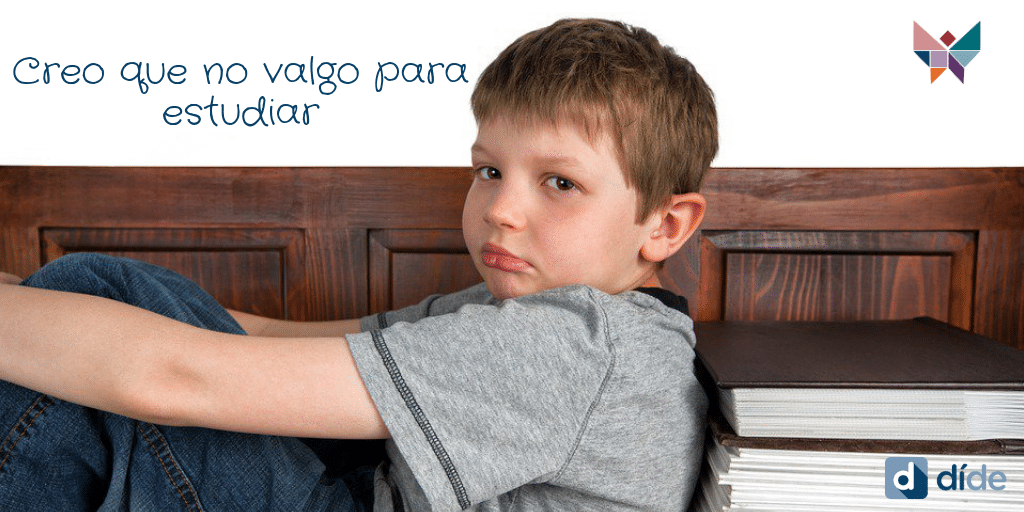
Family, motivation, and learning difficulties: factors that influence school performance.
Families worry a lot when their son or daughter has problems in school, and especially when they receive the report card, alarms start to go off.
But in many cases, that “try harder” may not be the main variable in their evolution, especially if they are children with undiagnosed and untreated learning difficulties. Grades are the indicator of invisible, undetected problems that undermine a child’s self-esteem and motivation.
In the primary education stage, the first indicators that can lead the child to academic failure can already be identified if we do not intervene in time.
Behind these problems we can find:
- learning difficulties in reading, writing, arithmetic, difficulties with non-verbal information processing, memory, language acquisition, articulation and pronunciation, etc.;
- developmental and social area difficulties such as situations of bullying and cyberbullying, social maladjustment, communication, sociability, empathy, mental, social and behavioral inflexibility, predisposition to advanced capacities, vision, psychomotricity, etc.;
- difficulties in the emotional and behavioral area such as family maladjustment, school maladjustment, low tolerance to frustration, disobedience, dominant-demanding-egocentric behavior, maladaptive use of new technologies, attention and impulsivity, eating-problematic behaviors, low self-esteem, low mood, etc.

Family environment
All structures, including the family, like machines, need maintenance. The peaceful functioning of family life requires small adjustments again and again, as they are composed of very complex elements such as people, elements in constant change.
Children need a family environment rich in stimuli, where they capture a true involvement of the family in their school life. Good habits and good customs must be taught since children do not come into the world with them incorporated. Many family conflicts arise because our children are not as we would like them to be, they do not behave as they should, we want them to have habits, values and good customs as if by magic and without any effort on our part.
We live in a society that feels a weakness for quick solutions that do not involve much effort. But for family conflicts there are no easy and lasting answers that do not involve addressing them directly and not ignoring them, it involves trying to solve them and it involves constant effort, reflection, affection and love.
Didactic methodologies in class
- School. Teachers also play an active role in making studying interesting in the eyes of the child through the teaching methods they use in their classes, their academic and pedagogical training, the type of relationship they promote and develop with their students, the school climate in general, etc.
- Methods and study techniques that help systematize knowledge and optimize time.
Self-esteem
Many times bad grades hide low self-esteem in children. If they feel that they are not able to reach the goals they set for themselves, it will be difficult for them to achieve them. Make them feel that you pay attention to them and take their feelings and concerns into account.
Children’s self-esteem is greatly influenced by the quality of the time that parents spend with them. It is very important that we take care of the concept they have of themselves and that we give them a positive image of who they are and what they do. We must teach them to incorporate mistakes into the learning process and not be demoralized by difficulties: all problems have a solution.
Attention
From a very young age, they must be accustomed to tasks that help them concentrate for periods of time appropriate to their age. To learn, it is essential that they are able to focus their attention on what they have in hand.
There are signs that we should not ignore: when they have difficulty concentrating, staying still, and when they react with greater impulsivity. ADHD is a learning difficulty that also remains in adult life, however, by treating the affected areas with re-education techniques, the improvement is remarkable and they usually progress in the academic field. On the other hand, ADHD syndrome refers to children who have difficulty maintaining attention when the task is not very motivating.
Reading and writing
It is one of the keys to school success. Reading and writing are essential for all subjects and if they do not master them, the building falters from its foundations. We must encourage in them the love for reading and writing.
Dysgraphia: Children with dysgraphia write very poorly and it is very difficult to recognize what they want to express. It is necessary to provide this child with a specific re-education of motor skills, for the correct ability of graphic expression.
Dyslexia: Children with Dyslexia often have difficulty reading and writing. They often make mistakes such as omitting letters, or changing their order. It is necessary that these children receive a type of special help so as not to see their results affected in school. Performing specific reading and/or writing activities favors the reduction of the problem.
The observation of parents and teachers makes possible the early detection of learning and development difficulties.
Motivation
Sometimes behind the bad grades is the disinterest and lack of motivation of the kids for everything that has to do with school. This leads to a lack of personal effort and abandonment of their tasks. It is striking, when we observe them, to verify that children have resources in the search for solutions to problem solving, they are usually practical and solve problems thinking about the here and now and do not consider it for a long period of time. Adults must be patient because children will reach the desired levels more slowly than desired, but the final result is more satisfactory. It is important that children think they can control their own lives. It is a fundamental condition for a person to be able to make decisions, feel the need to decide in any situation and also, adopt responsibilities, develop their own personal skills or act with confidence in an increasingly competitive world.
Memory
This capacity is key to school performance. It can be exercised and stimulated with games and fun activities. we must rule out memory problems, a learning difficulty that is characterized by presenting the following behaviors in the classroom: slow academic progress, forgetting instructions, errors in carrying out activities that require simultaneous storage and processing, loss in the execution of complex tasks or non-retention of learning.
Preventive measures
Many times parents do not know if what “worries” them about their children is something normal in evolutionary development or they should seek professional help. The current pace of life and the lack of time of parents often does not allow them to search for or find the necessary information to detect if there is a school or pedagogical problem. Other times, they do not know who they have to go to.
All this means that often, very valuable time is lost that could have solved a potential problem of school failure.
The period that elapses from the first suspicions to the diagnosis of any learning and development problem of the child causes anguish, uncertainty and disorientation in families. Early detection helps to plan an intervention in time
“We work with very young children who have difficulties in different evolutionary states. Others mature earlier, some have AACC, but we make them read and write ALL AT THE SAME TIME. If we knew how to respect the rhythms of each one, it would be easier to help them advance” Ana cobos, president COPOE
Digital resources are tools that greatly favor the work of educational counselors and teachers when it comes to detecting the difficulties and needs of students.
The Dide for professionals tool offers a global vision of the child’s profile to identify their difficulties and real needs. Parents and teachers are a key piece, their observations and answers to the digital questionnaires provide the necessary information for educational counselors to initiate an appropriate and timely intervention.
The version for families, Dide Familia, offers parents the possibility of identifying which factors are influencing their child’s learning and well-being. For this, they will need, if they wish, the participation of the teacher/s. If any indicator emerges, the assessment of a psychoeducational professional is recommended.
Already in 2013 the College of Psychologists of the C.V. endorsed its reliability following a study that obtained very satisfactory results in favor of the platform. “We have observed a significant degree of agreement between the scores given by the díde system and those given by expert counselors” .
Today, the educational platform díde is recognized by the European Union as a high quality instrument after passing the strict evaluation criteria with respect to Excellence, Impact, Quality and Efficiency of Implementation.

ENTER DIDE.APP AND START RIGHT NOW